January 31, 2019

For a smile, some economic history, and a look at how companies make some money, Super Bowl ads say a lot in just thirty seconds.
For a smile, some economic history, and a look at how companies make some money, Super Bowl ads say a lot in just thirty seconds.
Hearing the Clemson University football team got 300 burgers at the White House, an economist might name the resources needed for a quarter pounder.
To see if we allocate time like a typical American, we can look at a jelly beans video and the annual American Time Use Survey (ATUS).
When measuring happiness around the world after a World Cup finals match, the pain of loss can exceed the pleasure of gain.
Those vendors that sell us hot dogs, peanuts, and Coke at a ball game are thinking about a lot more than the food and the score.
We can use economic game theory to understand the decisions made by kickers and goalies during World Cup penalty shootouts.
Known as the super bowl of competitive eating, the July Fourth Nathan's Famous hot dog contest is a business for the top eaters.
Seeing that LeBron James has a four-year $154 million deal, we can ask what makes superstar salaries for athletes so high.
Because of events that range from football victories to electrical outages, birth rates can spike or fall nine months later.
In many ways, a country can become good at football (soccer) and nurture a World Cup winner but it also could get snagged by the "middle income trap."
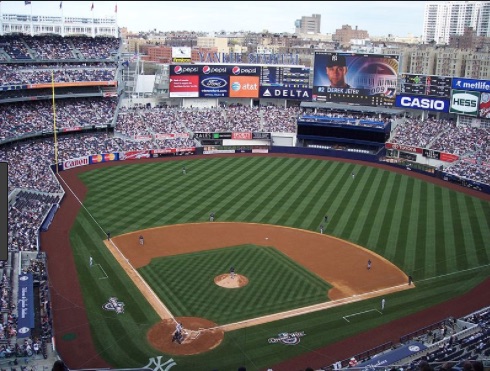
MLB stadium infields might look like dirt but really, firms have competed to prove that their combination of clay, silt and sand is unique.
Students applying to college might experience more competition at schools that have an unexpected March Madness bump in applicants.