November 25, 2022
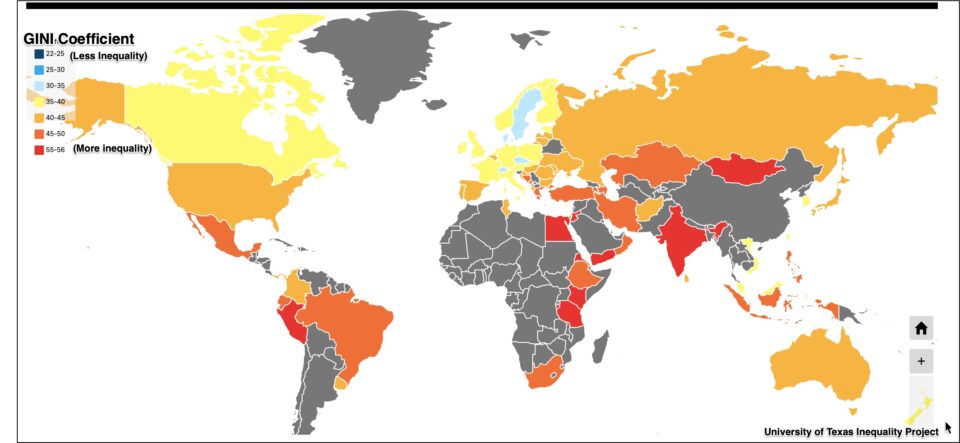
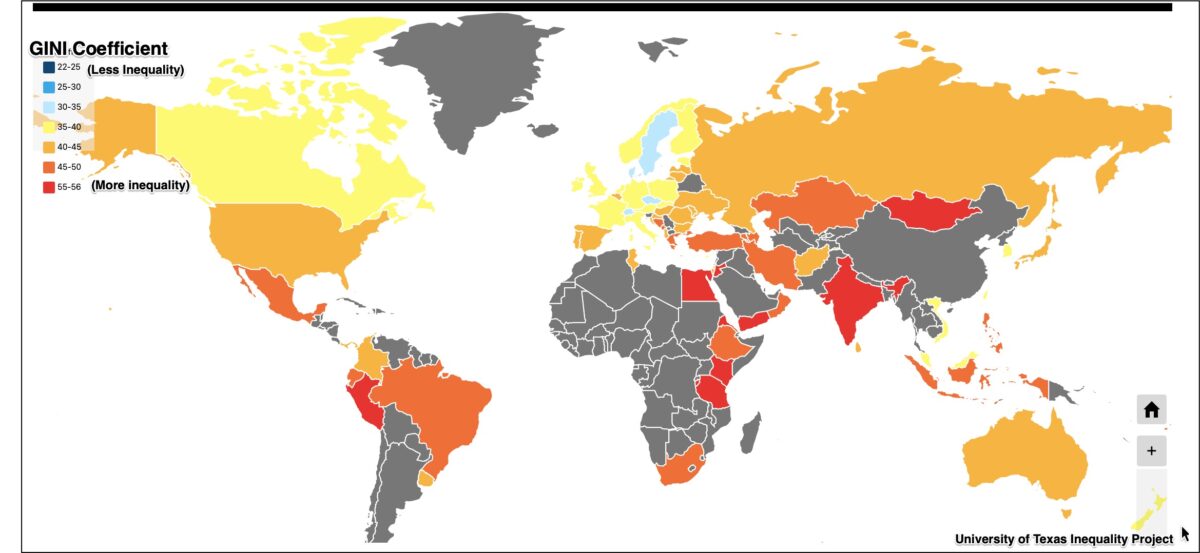
Among the countless ways to measure global inequality, we can look between nations, within them, and over time.
Among the countless ways to measure global inequality, we can look between nations, within them, and over time.
Whereas trhe U.S. givernment uses 11 leading economic indicators, others look at unexpected commodities.to predict a recession.
Whether it's top colleges or the happiest countries, we can ask about the validity of the ranking criteria that were used.
Recalling the Misery Index and concerns about inflation, we can ask whether economists believe that inflation or unemployment make us sadder.
Sometimes when we look at GDP ups and downs, rather than fluctuations in national wealth, something else is happening.
We can identify new GDP facts about size and wellbeing by seeing the GDP through the PPP lens of the International Comparison Program.
While we know that soon the world will have eight billion people, the debate continues about when we will reach peak population.
Seeing some prices start to slip downward, we can look for clues that indicate we are close to peak inflation.
A detailed look at how housing spending boosts the GDP reveals every floor of the expense and its significance.
Looking at livestock and the GDP and the number of animals on U.S. farms, we see surprisingly disparate statistics.
When assessing the economy consumers used to perceive economic indicators accurately but more recently their outlook has been skewed.
Although inflation is the media focus, still, looking at other criteria, we see a potentially optimistic economic outlook.