September 19, 2019
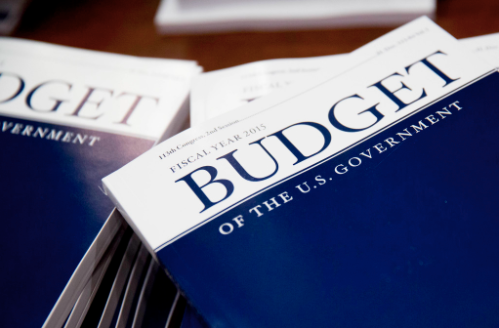
At $1 trillion, the ballooning U.S. deficit can be understood as a number, as a proportion of the budget, and the reason we owe China so much money.
At $1 trillion, the ballooning U.S. deficit can be understood as a number, as a proportion of the budget, and the reason we owe China so much money.
As the downside of low unemployment, traffic congestion can have an invisible cost that relates to time, gas, and aggravation.
Starting with Madonna's unclaimed money and forgotten savings bonds, we wind up with a map that ranks state fiscal health.
Looking at Italy's debt and beyond at the world, we can worry about massive borrowing that reflects a larger proportion of a country's GDP.
In addition to disagreeing about the name of a new U.S. Space Force, lawmakers have a long list of military, bureaucratic, and fiscal decisions.
Rather than identifying pockets of poverty, recent income mobility research suggests policy makers focus on opportunity areas.
When the police use their chalk lines on tires as the basis for parking tickets, they could be violating the U.S. Constitution.
Somewhat invisible, time determines whether central bankers and legislators have the accurate statistics that they need for economic policy.
Whenever the discovery, reconstruction, and FEDEx delivery of the Smithsonian's new T. rex is described, the story usually leaves out the fiscal details.
Spending decisions from national, state and local government, and private businesses, will depend on accurate data from the 2020 decennial census.