
Choosing Between a Road and a Reserve
April 21, 2024
Why a Cruise Ship is Like a Model-T
April 23, 2024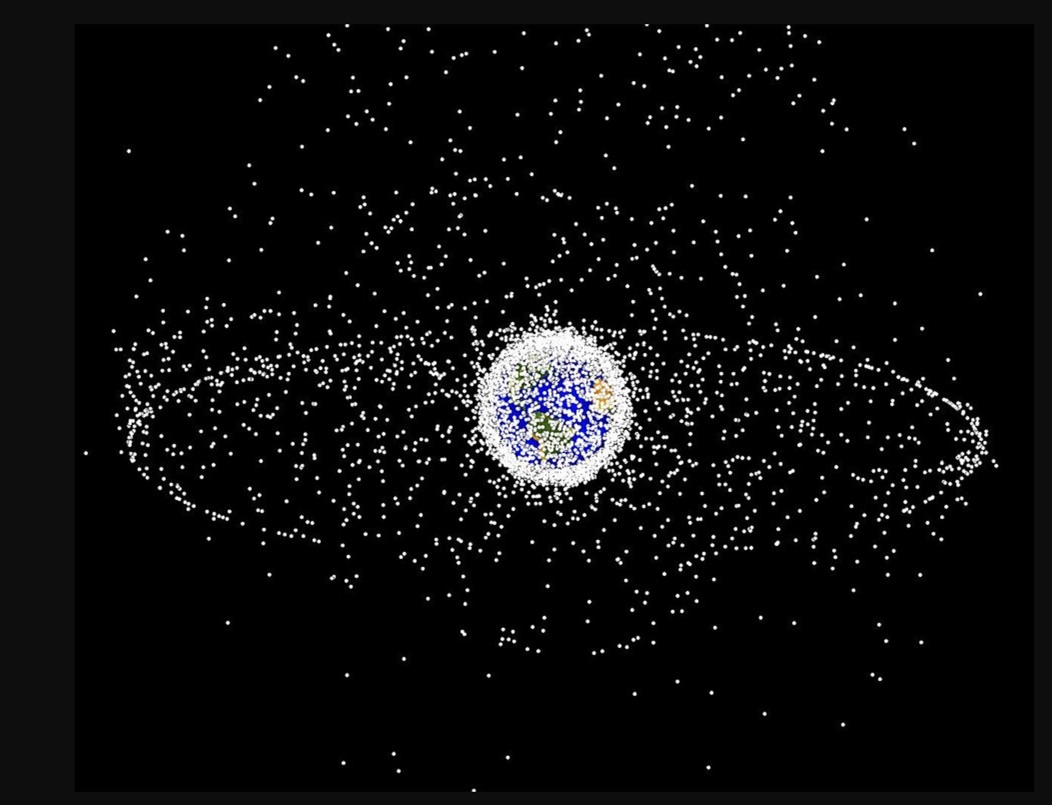
During Earth Day NASA also thinks about sustainability.
But they are referring to space trash.
Space Debris
On February 28th we had a real close call. Just 33 feet apart, a dead Russian spy satellite (Cosmos 2221) and a U.S. spacecraft that has been gathering data about the earth’s atmosphere since 2001, almost collided. This kind of collision can create a high-speed cascade of tiny metal shards that then could puncture other space vehicles.
Actually, it did happen in 2021 when a piece of space junk “whacked” a Chinese military satellite. While the satellite appeared not to have been destroyed, the smashup spawned at least 37 debris objects.
We can expect that the proliferation of space debris, shown in our computer-generated featured image, will lead to a whopping number of collisions:
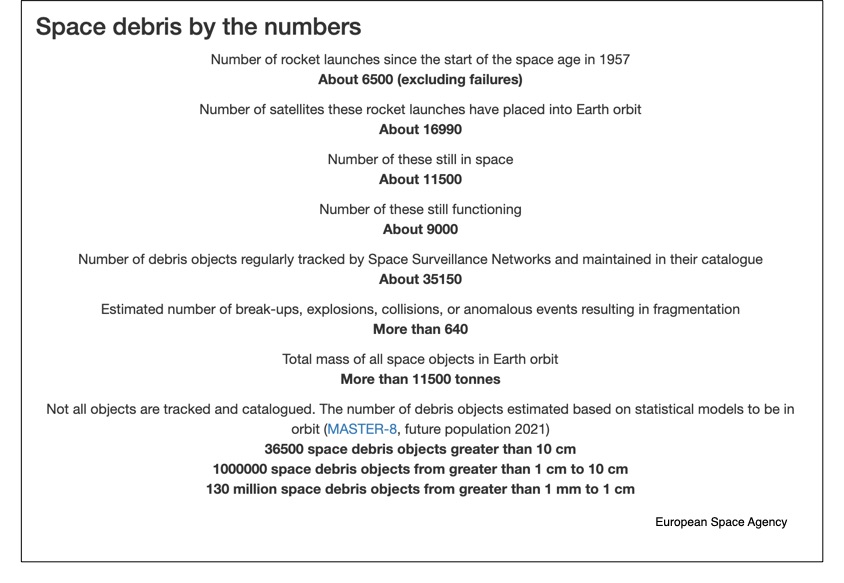 The Kessler Syndrome
The Kessler Syndrome explains how space debris replicates itself. Rather like a hydra regenerates itself, as a ripple of successive collisions, space trash creates new space junk when it destroys orbiting vehicles. In “Collision Frequency of Artificial Satellites: The Creation of a Debris Belt,” NASA scientist Donald Kessler explained the phenomenon with his co-author. As he later told us, “The ‘Kessler Syndrome was meant to describe the phenomenon that random collisions between objects large enough to catalogue would produce a hazard to spacecraft from small debris that is greater than the natural meteoroid environment.” Scientists worry that the Kessler syndrome will so clutter space that it hampers travel.
Our Bottom Line: The Tragedy of the Commons
At this point, the tragedy of the commons enters the picture. Whether looking at air pollution, an overgrazed pasture or space trash, people have the incentive to abuse publicly shared resources. Privately benefiting from our behavior, we tend to ignore the impact of everyone using the resource together. The result is a tragedy of the commons…
And the reason we should remember outer space on Earth Day.
Today’s featured image is a computer-generated rendering from Wikimedia Commons of the space debris that scientists have tracked.
My sources and more: A huge thanks to Rick for suggesting that I include the tragedy of the commons in this post. As a result, I switched “Our Bottom Line” after it was published. In the original post, my information came from NASA, here, here and here. Also, the European Space Agency had lots more statistics.