

Our Weekly Economic News Roundup: From COLAs to Bananas
October 17, 2026
Recently, we learned the names of the most popular 50 fruits in the world. To get their ranking, researchers used annual harvest data from the United Nations Food and Agriculture Organization.
We can start at the bottom.
The Most Popular Fruit
At #50, the gooseberry mostly grows in Russia. Having halved since 2006. the gooseberry population could soon leave the top 50. Next, traveling to a cranberry bog, we can see #45, the one major fruit grown in the United States and Canada. After that, India is the home of the sapodilla. Also known as chikoo, #40’s sap is the milky latex used in (yes) Chiclets.
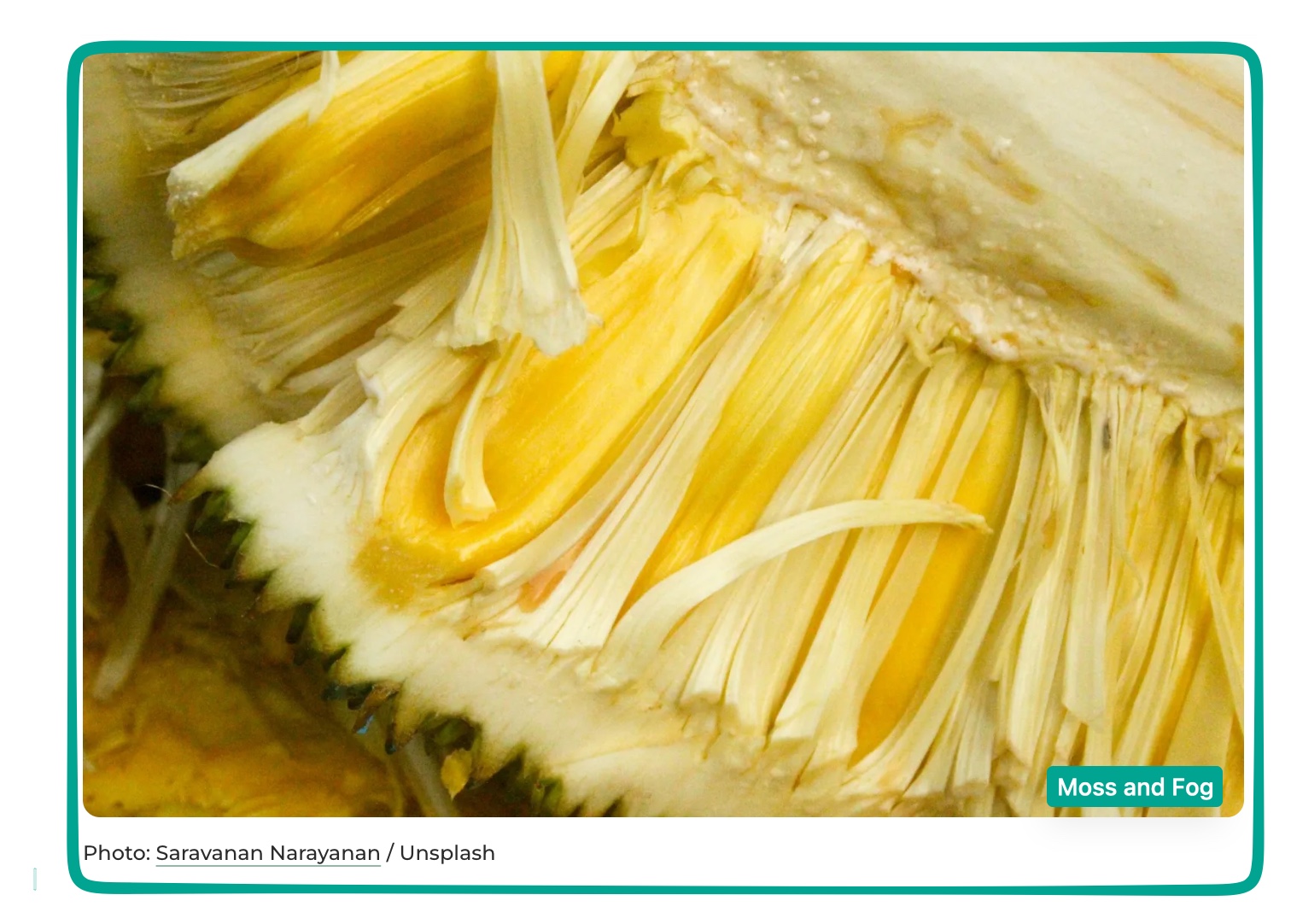
Continuing, we have the jackfruit (#32), weighing as much as 50 kilograms, and the durian (#28), so smelly that Singapore bans it from its subways. At #20, dates are one of my favorites, and perhaps the oldest sweet.
The jackfruit can be 90 centimeters long:
The Top 10
These are the Top 10. Surprised to see watermelons at #2, I checked. It’s because of their weight and Chinese demand:
- 10 Pineapples
- 9 Plantains
- 8 Mandarins
- 7 Mangoes
- 6 Coconuts
- 5 Oranges
- 4 Grapes
- 3 Apples
- 2 Watermelons
- 1 Bananas
Our Bottom Line: Fruit Demand
As economists, we know that demand is an entire schedule of the price/quantity pairs for which we are willing and able to buy a good or a service. Meanwhile, the quantity demanded is the amount of a good or service at a certain price.
With fruit, according to a recent study from Nature, our demand begins in the store where we care about the visuals, selecting fruit with uniform color, even shape, and unblemished skin. Then, though, at home, sweetness, crispness, and juiciness determine whether we return to the market for more.
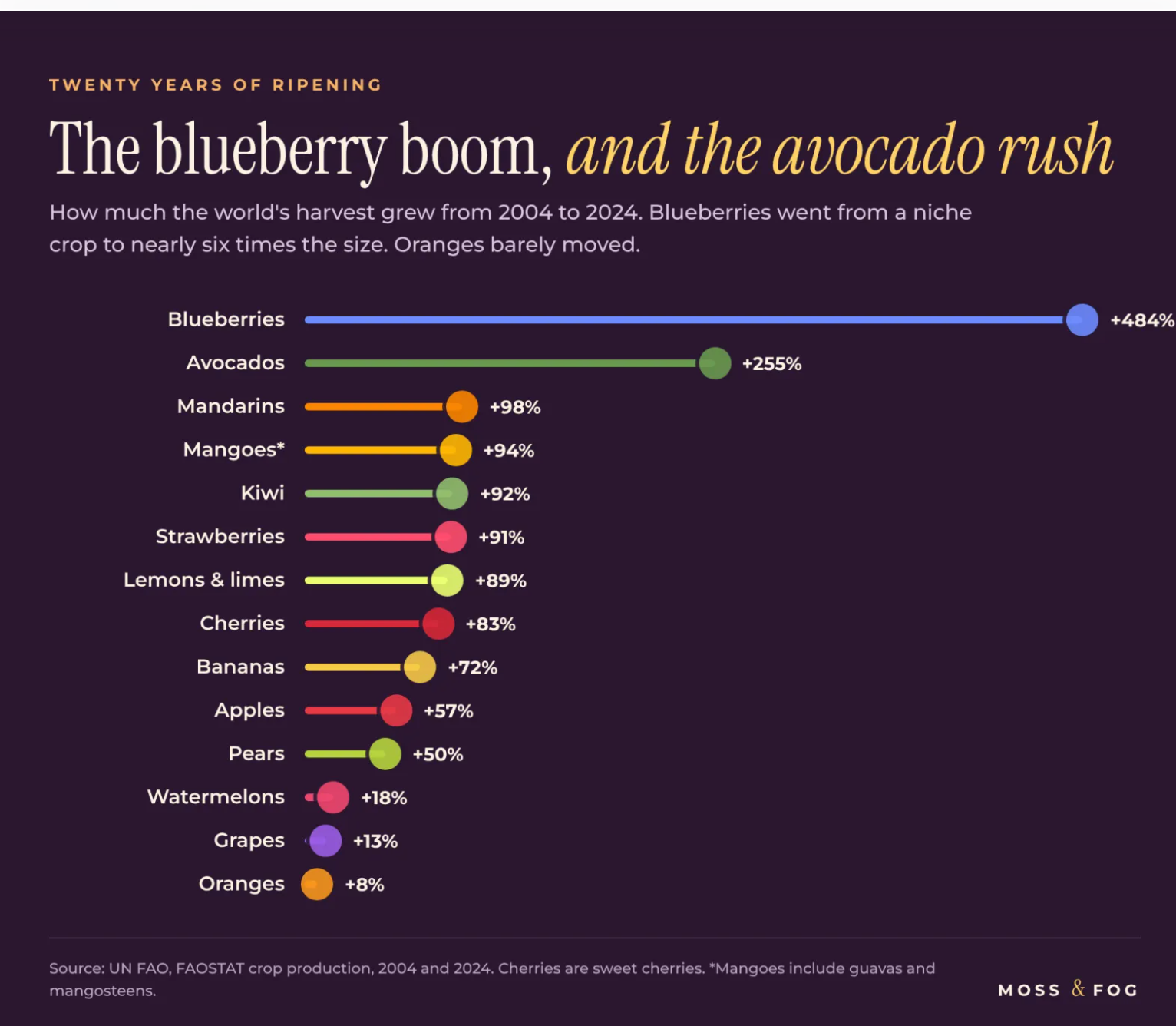
Between 2004 and 2024, our demand for blueberries and avocados surged while oranges barely budged:
My sources and more: Thanks to my Moss & Fog email for inspiring today’s post. Focusing on the world’s most popular fruits, they had a lengthy list with images and descriptions. Then, here, Nature had the reasons we demand fruit. And finally, do take a look at our post on the tomato, where we show why a fruit or vegetable’s visuals can be misleading.