

The Dog(e) That Needs An Owner
September 16, 2021
September 2021 Friday’s e-links: A Uyghur Teenager’s Story
September 17, 2021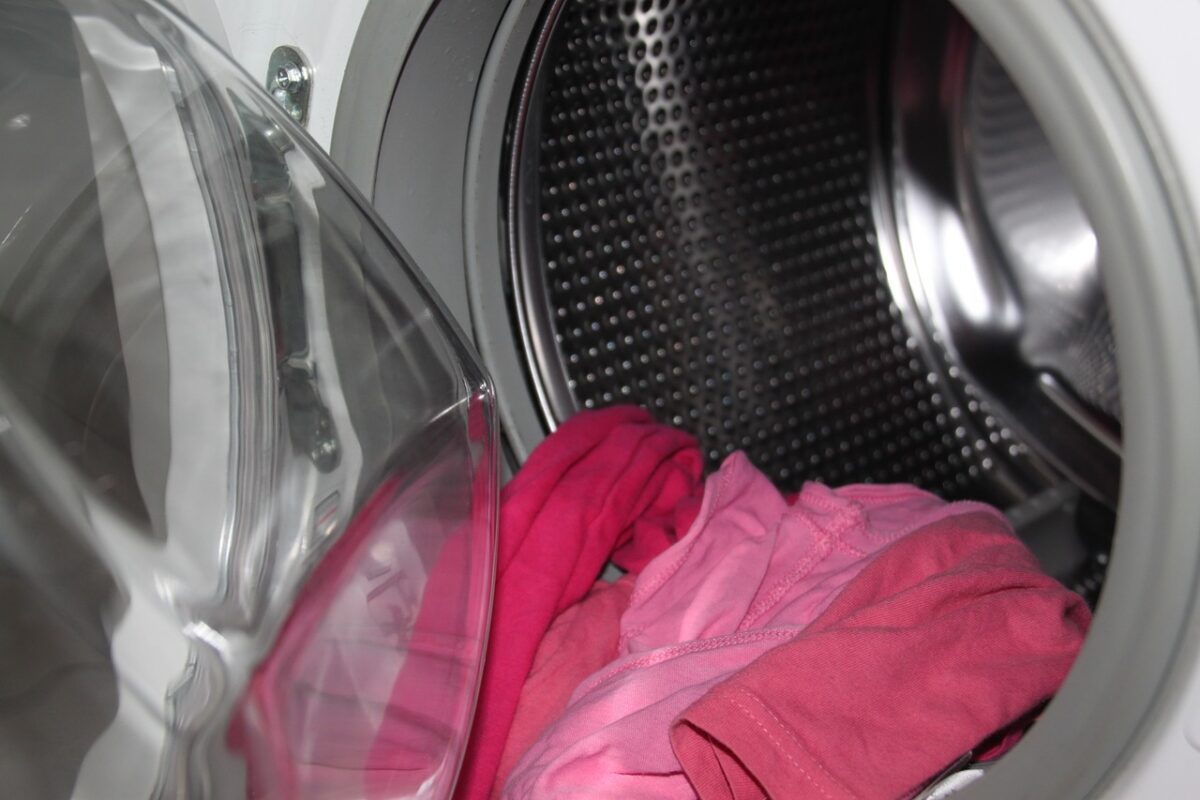
In a mid-1940s study of farm wives, researchers took a before and after look at the impact of electricity. Doing the laundry by hand, one woman walked 3,181 feet. With just one electric washing machine, the total dropped to 332 feet.
At home, changes in technology helped to shrink the gender gap.
Home Technology
Laundry is the perfect example.
Rewinding to 1900, we would see almost all households using a scrub board. Women had to carry the water they needed to a wood or coal burning stove. Heated, the water was used for washing. Next, the clothes were rinsed, squeezed by hand or with a mechanical wringer, and hung out to dry. Lastly, awaiting wrinkle removal, a flat iron sat on a hot stove. Putting all of this together, it is likely that washing and ironing occupied 8.5 hours.
In addition to saving 2,489 feet, electricity reduced the time to wash a 38-pound load of laundry to 41 minutes and ironing went down to 1.75 hours from more than four.
As always, of course, the story is a bit more complex. In 1929, (described by a magazine) the housewife’s “obsession with ‘motorized implements’ led her to buy wringers directly attached to the tub. Metal rollers (or vulcanized rollers) readily squeezed out the water. The problem? The new power wringers accidentally grabbed women’s hands, sleeves, and hair while drying their clothing.
Still, as Hans Rosling (1948-2017) explains in his nine minute TED talk, the washing machine was magical. At the end, he surprises viewers by lifting a book out of the machine rather than clean clothes. Do take a look. I suspect that your opportunity cost is worth it:
From electrified washing machines, we can leap to irons, refrigerators, stoves, microwaves…we can just look at our kitchen. (With a broken dishwasher, I’ve just traded 30 minutes a day–3 1/2 hours a week from work time (or Doc Martin, my current Hulu diversion) to doing the dishes.
Our Bottom Line: Production Possibilities Graphs
An economist could use a production possibilities graph to illustrate the impact of the washing machine. Representing the maximum that land, labor, and capital can produce, the production possibilities frontier can also show economic growth when it moves to the right because of innovative capital.
Please note that our axes could have been countless pairs of goods, services, and categories that use the factors of production–land, labor, and capital. The key is that a fundamental change in a factor of production expands productive capability:
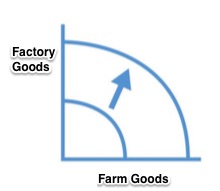
Where are we? About much more than clean clothing, a washing machine frees women from the shackles of housework. Becoming more productive, they elevate their value and diminish the gender gap while also fueling economic growth.
My sources and more: An online excerpt from Evolving Households: The Imprint of Technology on Life had the analysis and statistics for the washing machine. I also recommend Stanley Lebergott’s Pursuing Happiness for a classic look at the impact of household technology.