

Where Equal Pay Cost £1.1bn
September 10, 2023
Who Owns the Nile?
September 12, 2023
Asked about explaining the deficit, White House Press Secretary Karine Jean-Pierre recommended that reporters “Talk to an economist.”
So, we did.
Explaining the Deficit
Responding, economist Ed Yardeni focused on the deficit in his September 11 “Morning Briefing.”
He started with the deficit cycle. Defined as when spending exceeds revenue during one fiscal year (10/1/22-9/30/23), the deficit is not behaving normally. Calling it the deficit cycle, Dr. Yardeni told us that recessions usually boost deficits while prosperity constrains them. As a result, the ratio of the deficit to nominal GDP has an inverse correlation with unemployment. Not now though. The ratio is rising, unemployment is at record lows, and the economy is growing.
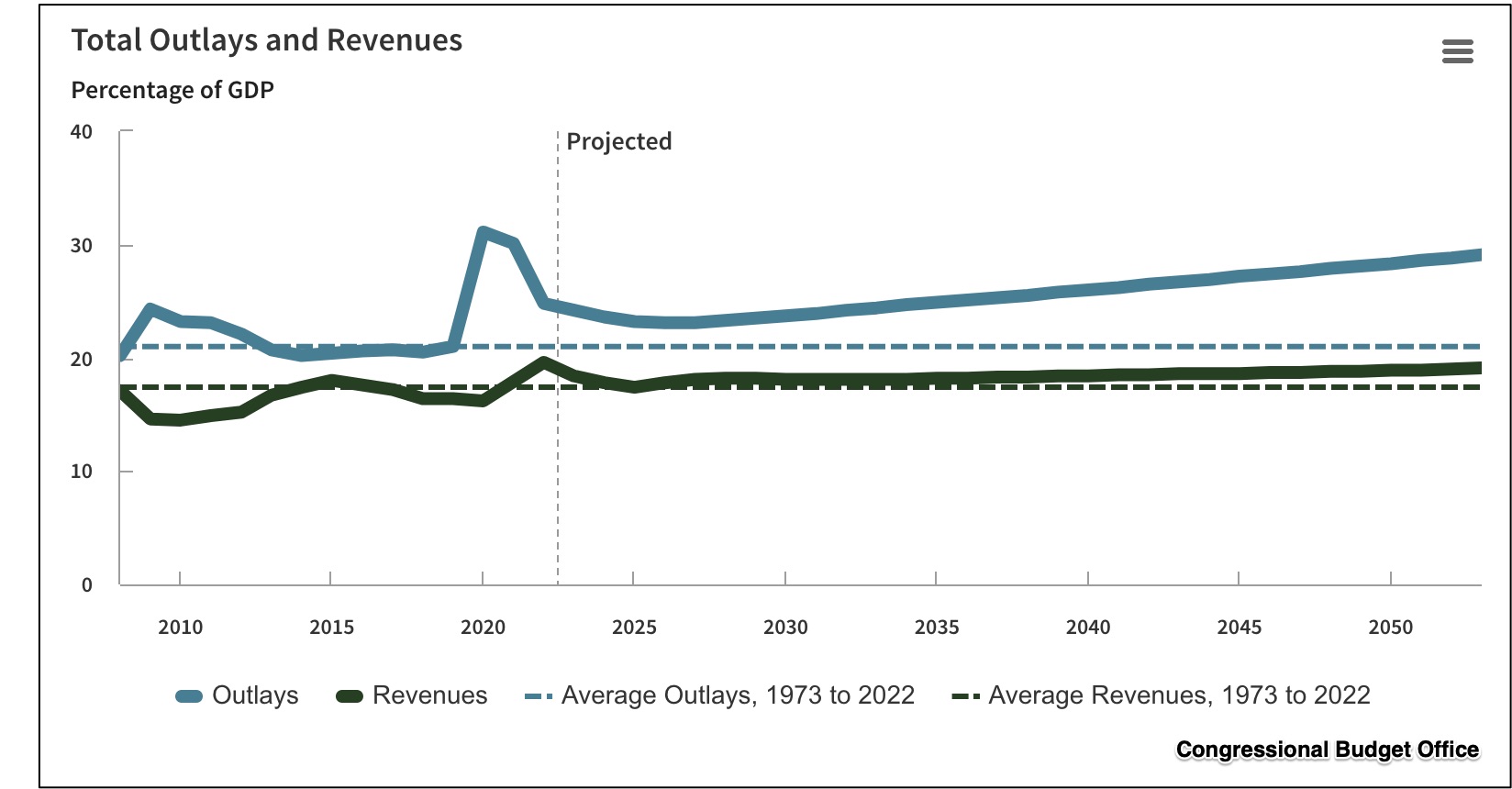
You can see below that the deficit started a new climb recently:
 Revenues and Outlays
With revenue a variable that can shrink a deficit, the drop in tax dollars is fueling its rise. Here, it’s individual income tax receipts that are down, mostly because investors are no longer bailing out of a bear stock market. However, offsetting the decline, payroll tax receipts are up because of record employment. In addition, corporate tax totals have also increased.
Finally, he notes that outlays are climbing at a faster pace. With rising rates, the government’s interest expense has grown. Meanwhile Social Security and Medicare are up a whopping $2.151 billion:
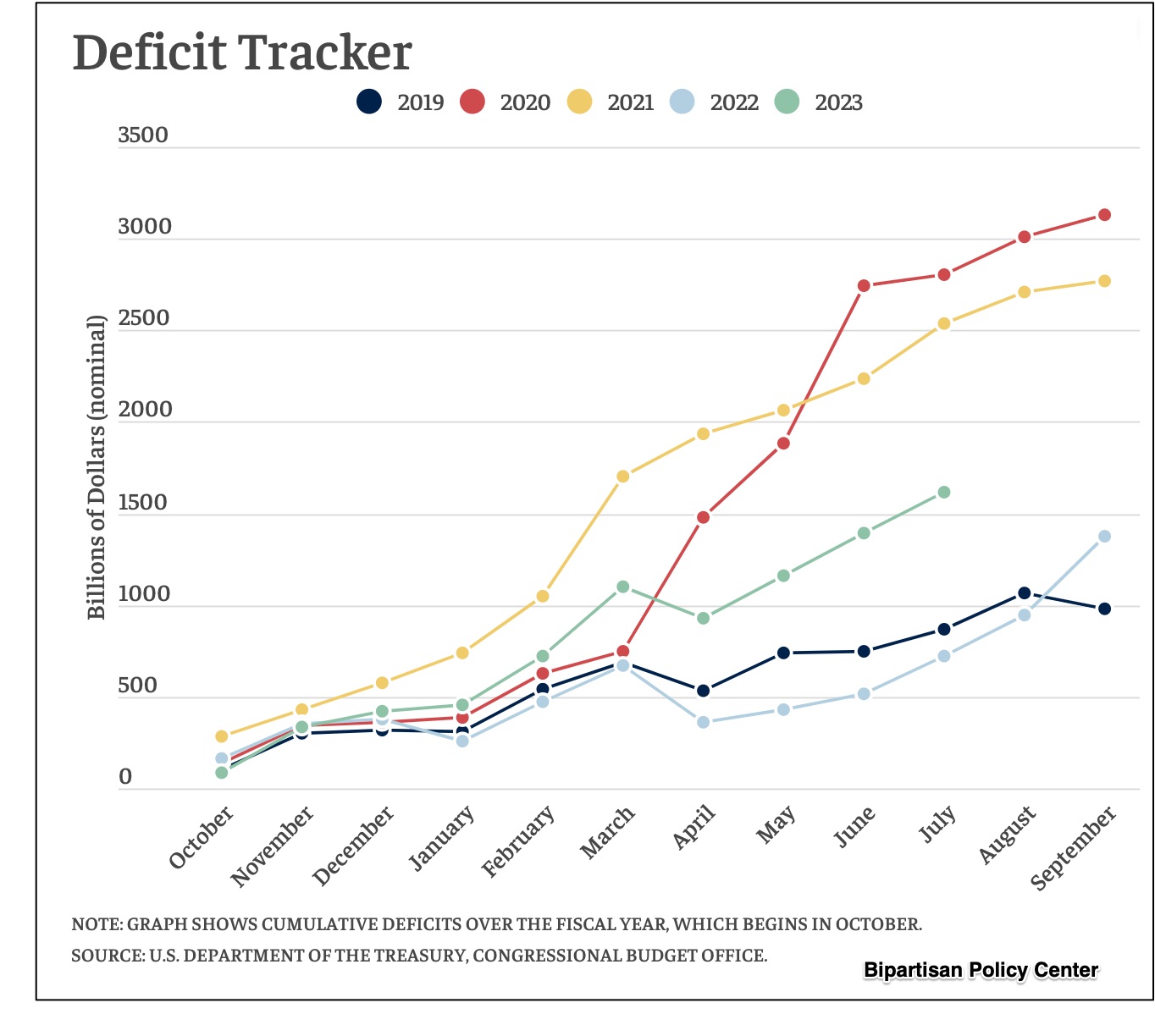
According to the Bipartisan Policy Center, as of July 2023, revenue rose less than outlays. Yes, at $276 billion revenues were up 3 percent. However, outlays were up $499 billion, a 4 percent pop.
Our Bottom Line: The Difference Between the Deficit and the Debt
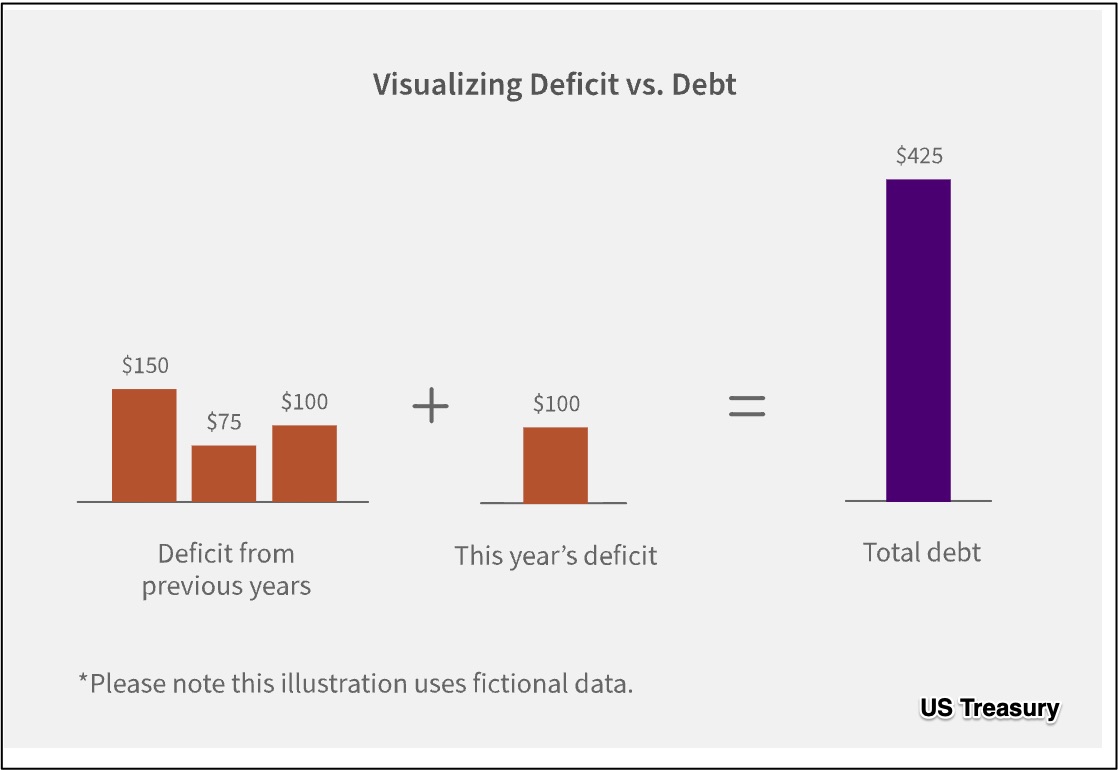
While the deficit refers to more outlays than revenue in one fiscal year, the debt covers all that we owe. Below, the treasury uses fictitious numbers to illustrate the difference between the two:
My sources and more: Thanks to Dr. Yardeni for inspiring today’s post. (His “Morning Briefing” is gated so I could not link to it.) However, there is a slew of links for deficit facts. For our facts, we mostly used the U.S. Treasury. here, the BPC’s Deficit Tracker, here, and the CBO.
We should note that the Bipartisan Policy Center (BPC) disagreed with Dr. Yardeni. Probably calculating their totals differently, most of their numbers differed from his but their conclusions were similar.